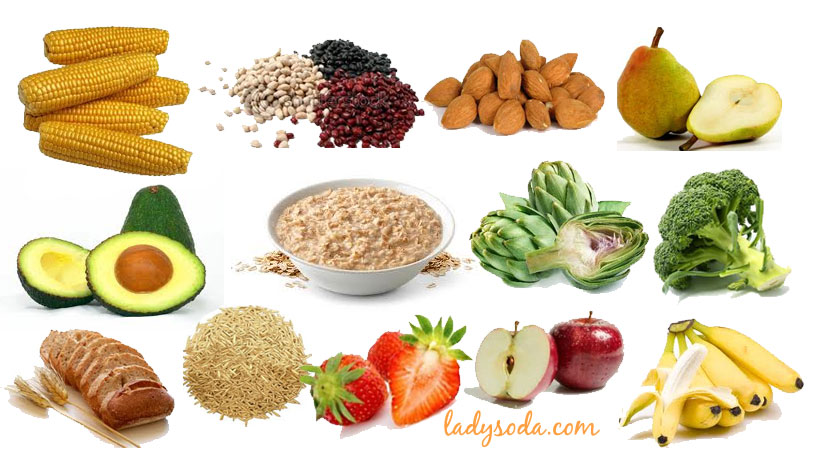
When we think of fibre, we usually think of bran or Metamucil, something that we take to prevent constipation and that tastes like cardboard. Change that thinking. Fibre is a vital nutrient, essential to human health. Unfortunately, the American diet is dangerously deficient in fibre, a deficiency that leads to many health problems (for example, haemorrhoids, constipation, varicose veins, and diabetes) and is a major cause of cancer. As you can see, if you get fibre naturally in your diet from great-tasting food, you get much more than just constipation relief!
When you eat mostly natural plant foods, such as fruits, vegetables, and beans, you get large amounts of various types of fibre. These foods are rich in complex carbohydrates and both insoluble and water-soluble fibres. The fibres slow down glucose absorption and control the rate of digestion. Plant fibres have complex physiological effects in the digestive tract that offer a variety of benefits, such as lowering cholesterol.
Because of fibre, and because precious food components haven’t been lost through processing, natural plant foods fill you up and do not cause abnormal physiological cravings or hormonal imbalances. Some people are so confused that they do not know what to believe any more. For example, two recent studies about fibre received sensational coverage by the media after appearing in the April 20, 2000, New England Journal of Medicine. Newspapers proclaimed the bold headlines HIGH-FIBRE DIET DOES NOT PROTECT AGAINST COLON CANCER. No wonder our population is so confused by conflicting messages about nutrition. Some people have actually given up trying to eat healthfully because one day they hear one claim and the next week they hear the opposite. There’s a lesson to be learned here: Don’t get your health advice from the media!
News reports on the subject of health and nutrition are often sensationalized and inaccurate ... designed to grab the readers attention rather than present scientifically accurate information.
The key thing to remember is not to jump to conclusions on the basis of one study or one news report. You can see how research information is often (mis)reported in the news. A review of more than two thousand nutritional research papers in preparation for this site shows there is not much conflicting evidence. As in a trial, the evidence has become overwhelming and irrefutable — high-fiber foods offer significant protection against both cancer (including colon cancer) and heart disease. We didn’t say fibre. We said high-fibre foods. We can’t just add a high-fibre candy bar or sprinkle a little Metamucil on our doughnut and French fries and expect to reap the benefits of eating high-fibre foods, yet this is practically what the first study quoted in the New England Journal did.
The studies mentioned above did not show that a diet high in fresh fruits, vegetables, beans, whole grains, and raw nuts and seeds does not protect against colon cancer. It has already been adequately demonstrated in hundreds of observational studies that such a diet does offer such protection from cancer at multiple sites, including the colon.
The first study merely added a fibre supplement to the diet. You couldn’t expect adding a 13.5-gram fibre supplement to the disease causing American diet to do anything. It is surprising that this study was actually conducted. Obviously, adding supplemental fibre does not capture the essence of a diet rich in these protective plant foods. The second study compared controls against a group of people who were counselled on improving their diet. The participants continued to follow their usual (disease-causing) diet and made only a moderate dietary change — a slight reduction in fat intake, with a modest increase in fruits and vegetables for four years. The number of colorectal adenomas four years later was similar. Colorectal adenomas are not colon cancer; they are benign polyps. Only a very small percentage of these polyps ever advance to become colon cancer, and the clinical significance of small benign adenomas is not clear. In any case, it is a huge leap to claim that a diet high in fruits and vegetables does not protect against cancer. This study did not even attempt to address colon cancer, just benign polyps that rarely progress to cancer.
In both studies, even the groups supposedly consuming a high- fibre intake were on a low-fibre diet by any standards. The group consuming the most fibre only ate 25 grams of fibre a day. The high- fibre intake is merely a marker of many anti-cancer properties of natural foods, especially phytochemicals. The diet plan recommend on this site (to be discussed in detail later) is not based on any one study, but on more than two thousand studies and the results have been seen with thousands of confirmed cases. Following this plan, you will consume between 50 and 100 grams of fibre (from real food, not supplements) per day.
The reality is that healthy, nutritious foods are also very rich in fibre and that those foods associated with disease risk are generally fibre-deficient. Meat and dairy products do not contain any fibre, and foods made from refined grains (such as white bread, white rice, and pasta) have had their fibre removed. Clearly, we must substantially reduce our consumption of these fibre-deficient foods if we expect to lose weight and live a long, healthy life.
Fibre intake from food is a good marker of disease risk. The amount of fibre consumed may better predict weight gain, insulin levels, and other cardiovascular risk factors than does the amount of total fat consumed, according to recent studies reported in the October 27, 1999, issue of the Journal of the American Medical Association. Again, data shows that removing the fibre from food is extremely dangerous. People who consume the most high-fibre foods are the healthiest, as determined by better waist measurements , lower insulin levels, and other markers of disease risk. Indeed, this is one of the key themes of this site or to anyone considering his or her diet healthy, it must be predominantly composed of high-fibre, natural foods.
It is not the fibre extracted from the plant package that has miraculous health properties. It is the entire plant package considered as a whole, containing nature’s anti-cancer nutrients as well as being rich in fibre.